Seeing a bad day coming
One missed call is a caller to ring back. Six in an hour is a problem with the day: someone off sick, a ring group with nobody left in it, a queue nobody's watching. The figures at the end of the month will show it, long after it could have been fixed. TalkWatch can tell someone while it's happening, and show when it tends to happen so it can be planned for.
Hearing about it while it's happening
Four conditions look at the line rather than the caller. Each is tested when an alert comes in, so a flow on Missed call with one of them only goes further when the day has turned bad:
| Condition | Holds when |
|---|---|
| If the answer rate drops | the number's answer rate over the last so many hours, up to a day, is below a percentage. Only once there are three calls to judge by, so one missed call first thing isn't a rate of nothing |
| If the number keeps missing calls | N calls in on the same number went unanswered in the last so many minutes |
| If callers are waiting | at least N missed callers on the number are still to be rung back, as Call-backs counts them |
| If it rang long | it rang longer than so many seconds before it was answered, went to voicemail or the caller hung up |
The demo starts with two flows built on them:
Answer rate slipping
When    Missed call
If      the number's answer rate over 2 hours is below 70%
Notify  the manager
Call-backs piling up
When    Missed call
Branch  on 3 or more callers on the number are waiting to be called back
  If so       Notify  the manager, urgent
  Otherwise   Notify  whoever it rang
The second is worth copying as it stands. On a quiet day each missed call goes to whoever it rang, as usual. Once three callers are waiting, the same missed call goes to the manager instead, marked urgent, because by then it isn't one call any more.
On a busy line, put a Bundle step before the notify, so a bad half hour arrives as one message (5 × Missed call) instead of five buzzes, and set quiet hours on the channel so the manager isn't woken by Sunday's calls.
Seeing when it happens
Analytics holds the figures to plan by, over 7, 30 or 90 days, or any
period up to 92 days with ?from= and to= in the address.
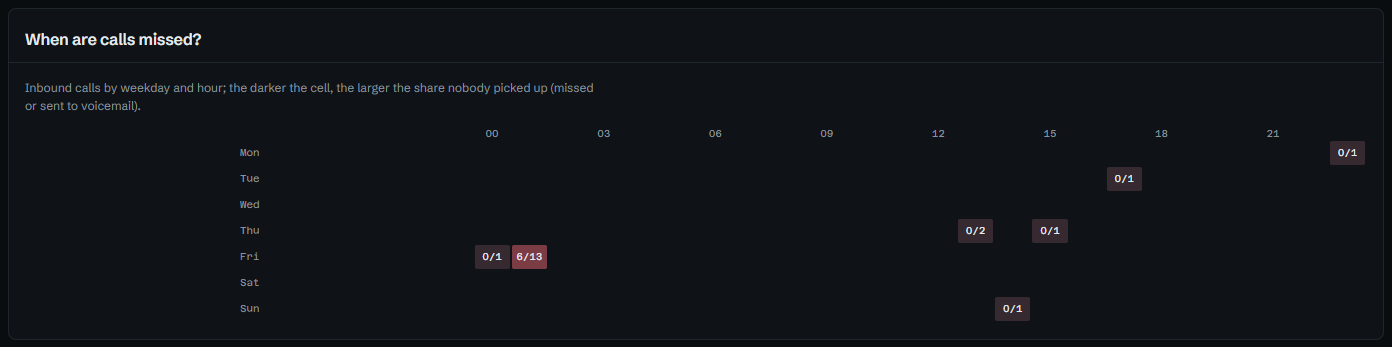
When are calls missed? is a grid of weekday by hour, darker where a larger share of calls went unanswered. A dark column at 12:00 is lunch with nobody covering; a dark Monday morning is the weekend's call-backs arriving at once.
How fast are calls answered? sets how long phones ring before an answer against how long missed callers waited before giving up. When those two are close, as here, callers are giving up just before someone would have answered, and the page says so: answering a little sooner, or ringing more phones, would reach some of them.

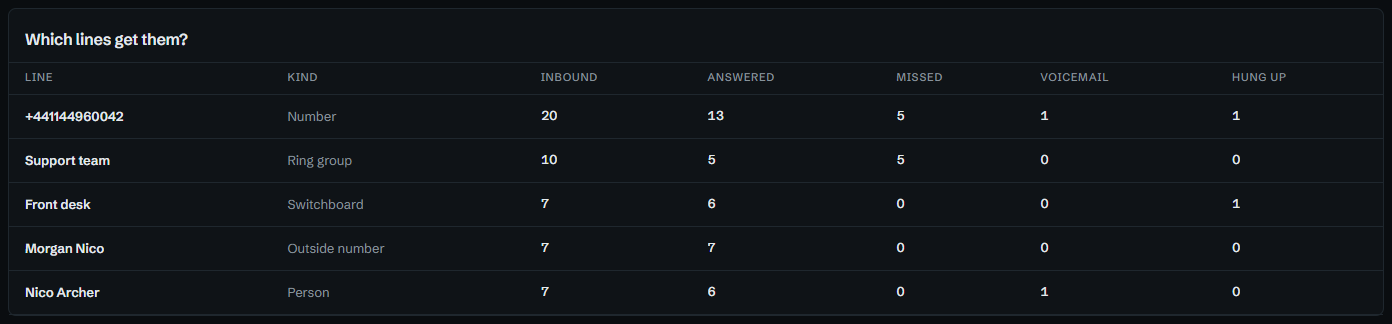
Which lines get them? breaks the calls down by number, person, switchboard and ring group, to see which line the missed calls are on.
The same, in a report
The Weekly summary report puts the figures, each line, who answered and the busiest times in an inbox on Monday morning, each figure against the week before, green when it moved the right way and red when it didn't. See A report in the manager's inbox.
Try it in the demo
Play Missed from Try a scenario a few times. Watch the answer rate on Now fall, then open the Call-backs piling up flow and press Try it on the last 7 days.
See also
- Conditions, the full list.
- Analytics and Switchboards.
- Getting back to every missed caller, for one caller at a time.