Callers who give up at the switchboard
A switchboard, Talk's auto-attendant, is the first thing most callers hear, and
it's where a good share of them stop. On the console TalkWatch was built
against, 70 of 155 inbound calls ended at the switchboard, after about 14
seconds on average. Some of those are robocalls and wrong numbers, which is
fine. Some are customers who didn't want to sit through the greeting, which
isn't, and Talk's own log counts them all as accepted, so there's no way to
tell from it which you've got.
Where they hang up
Switchboards shows each one over the last 30 days (or 7, or 90): how many calls reached it, how long its greeting runs, how many hung up during the greeting and how long they lasted, and what became of everyone who got past it.
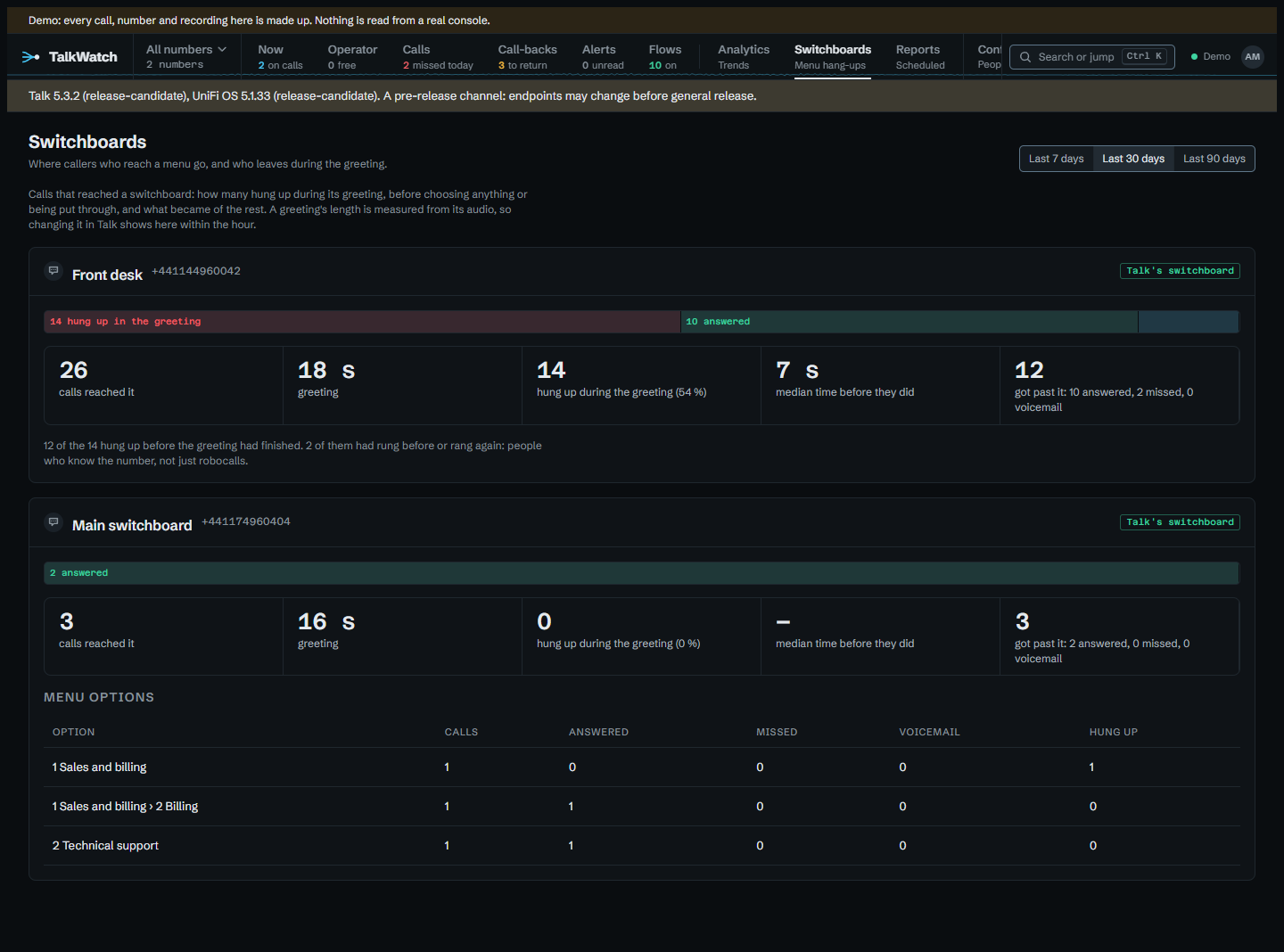
Read it like this:
- Most hang-ups in the first fifteen seconds, with a 40-second greeting: callers aren't waiting for it to finish. That's the greeting to shorten, or the option most people want to move to the front.
- Hang-ups that come back: the page counts how many of the callers who hung up had rung before or rang again. Those are people who know the number, not robocalls, and they're the ones the greeting is losing.
- A menu option with a high hung-up or missed count: the option leads somewhere that doesn't answer. Look at which ring group it rings, and when.
- Chose nothing: callers who listened to the menu and pressed nothing. If that's large, the options probably don't say what callers came for.
- An option split by opening hours: the rows under it say how many of its calls came in hours and how many out of hours, worked out from the hours set at the time. A busy out-of-hours row is callers you could be answering.
A greeting's length is measured from its audio, so a shorter greeting saved in Talk shows here within the hour, and the next month's figures say whether it helped.
Watching it happen
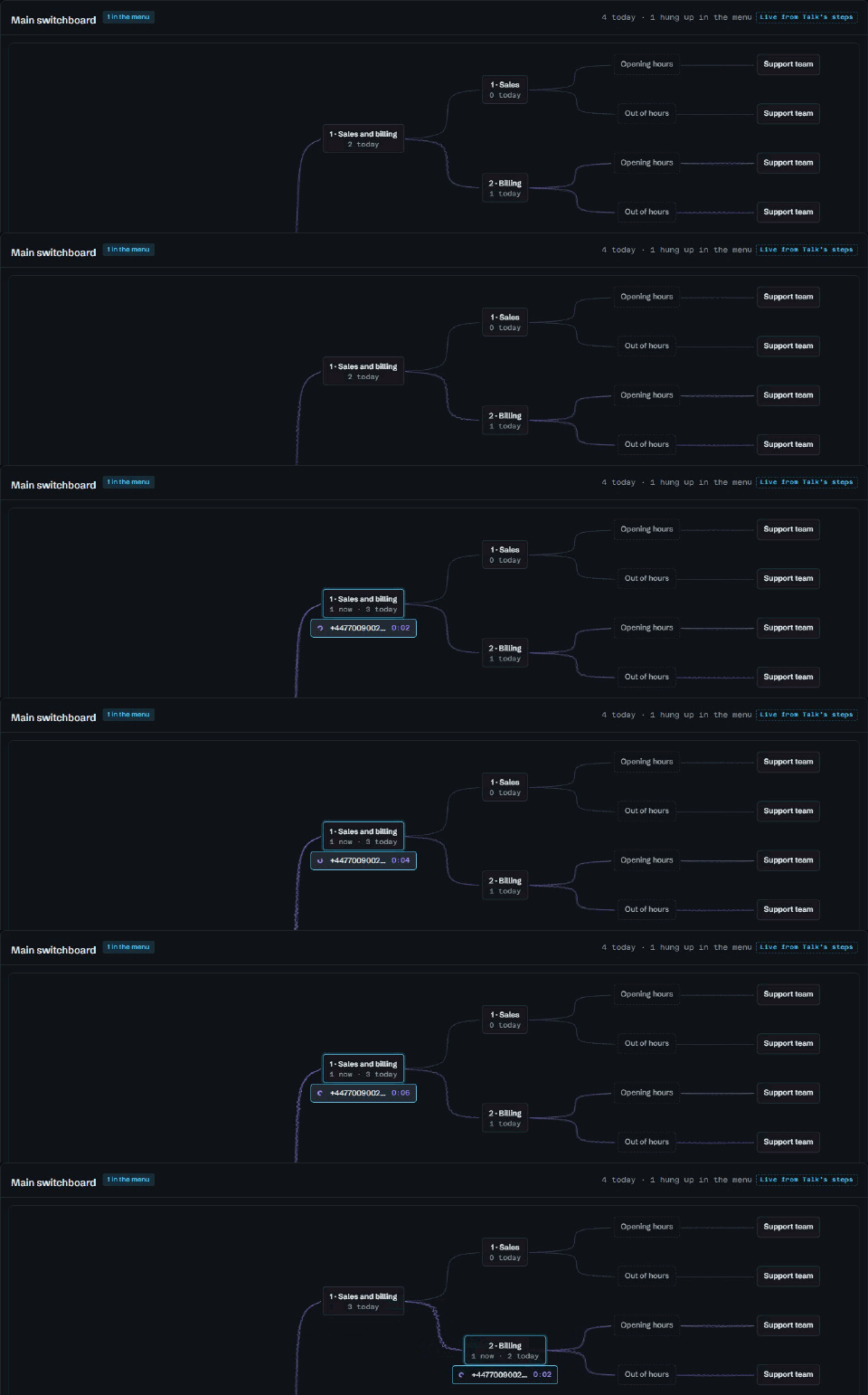
Operator draws each switchboard as the flow callers move through, with each caller as a card at the stage they've reached, moving as they press keys.
Hearing about the ones that matter
Hung up at the switchboard is its own trigger, kept apart from Missed call because most of these aren't missed calls. The demo's Hung up in the menu flow uses a branch to tell the two kinds apart:
When    Hung up at the switchboard
Branch  on the caller is someone known
  If so       Notify  the front desk, urgent
  Otherwise   Notify  the front desk
Switchboard problem is the trigger for the switchboard itself going wrong: a greeting with no audio, or a menu or out-of-hours branch with nowhere to go. It's raised once as each problem appears, so a flow that notifies the person who looks after the phones hears about it before callers start giving up.
If known caller holds when the caller is named on the call or is one of Talk's contacts, so a regular customer hanging up in the menu is urgent and a number nobody knows isn't. Add If repeat caller for anyone who's tried twice in the hour, or leave the otherwise path empty to hear only about people you know.
If they chose narrows a flow to callers who picked particular options, so the sales team can hear about missed calls that came through 1 · Sales and billing without hearing about support's.
Lists to send round
/calls?outcome=menu&period=30dis every caller who hung up at a switchboard in the last 30 days, with the route each took.- A report with Switchboard greetings and menu options carries the same figures as the page, by email. The Monthly trends report starts with it ticked.
Try it in the demo
Play Hangs up in the menu and Hang-up alert from Try a scenario, with Operator open, then look at Switchboards and the Hung up in the menu flow.